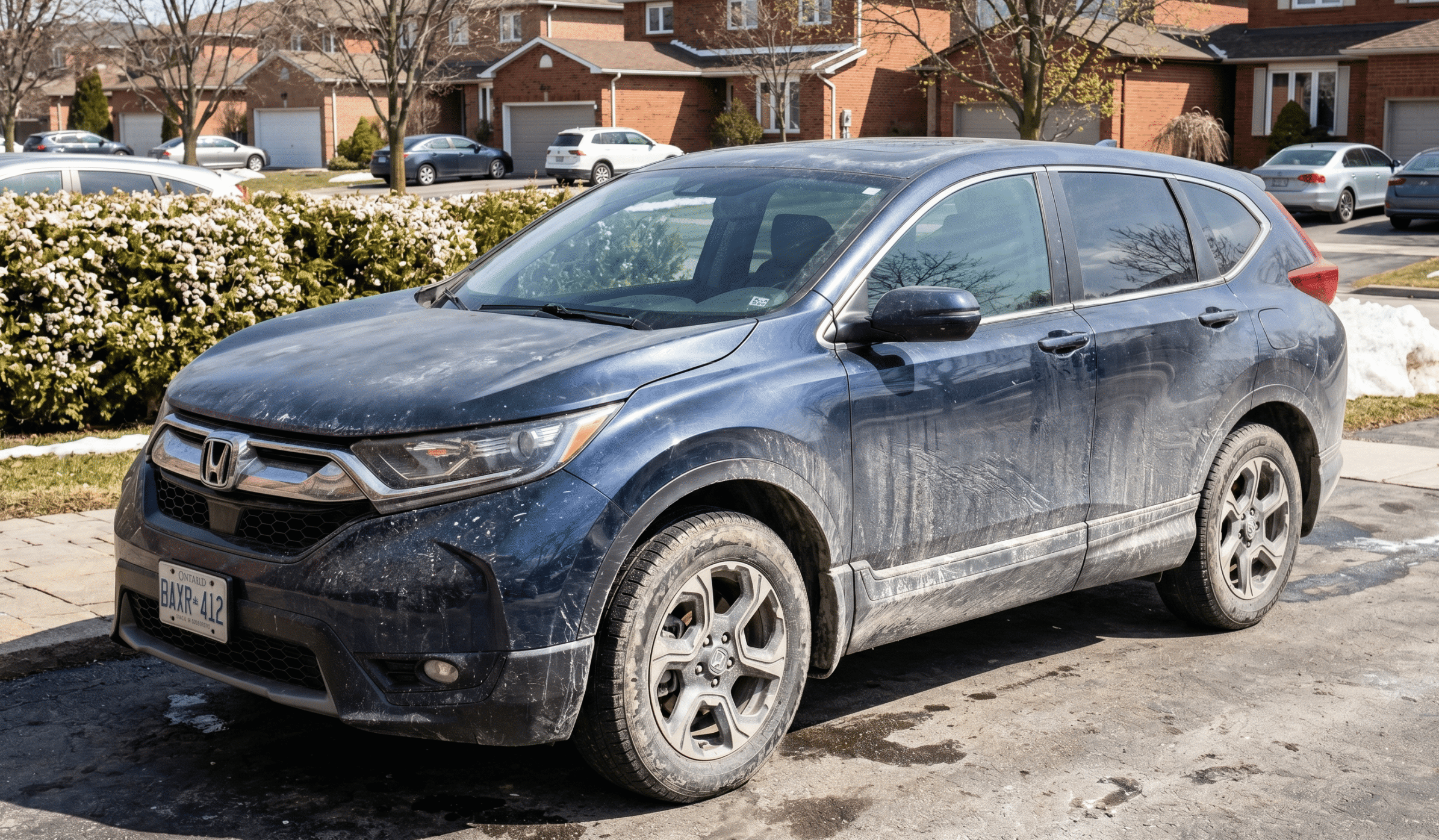
If your car looks anything like the one above, you already know this. Every spring in Woodbridge and the Greater Toronto Area, the same scene plays out. The snow retreats, the sun finally holds, and drivers take a long, honest look at their vehicles after months of salt, slush, and freezing temperatures. What they find is rarely encouraging.
What they typically find is faded clear coat, white residue baked into lower panels, and fine scratches that accumulated quietly under winter grime. The paint has taken a beating, and spring is the moment it becomes impossible to ignore.
It is also the single best window of the year to apply a ceramic coating. Here is why.
What a Canadian Winter Actually Does to Your Paint
Toronto and Woodbridge roads are salted heavily from December through March. Salt is effective at keeping roads safe. It is also chemically aggressive toward automotive finishes. Here is what happens at the surface level over a typical GTA winter:
- Salt pulls moisture from the air and holds it against your vehicle’s surface, working into microscopic chips, panel seams, and door edges.
- Clear coat degrades gradually under repeated freeze-thaw cycles, losing flexibility and becoming more prone to chipping.
- Iron fallout from brake dust and road debris bonds to paint and begins oxidizing, leaving orange micro-spots that are invisible until spring light hits them.
- Standard washes remove surface salt but miss residue trapped in wheel wells, undercarriage, and door sills, where it keeps working on bare metal long after the last snowfall.
“By March, most Woodbridge vehicles have sustained paint damage they are not yet aware of. Spring is not just cleaning season. It is the diagnostic window.”
Why Spring Is the Optimal Coating Window
Ceramic coating bonds chemically to your vehicle’s clear coat. That process requires specific conditions to work properly. Spring in the GTA delivers them.
| Condition | Why It Matters | GTA Spring (Mar–Apr) |
|---|---|---|
| Temperature | Too cold slows curing; too hot causes uneven flash-off | 5-12°C, ideal range |
| Humidity | High humidity affects adhesion and cure clarity | Moderate, manageable |
| Surface prep | Paint must be fully decontaminated before coating | Post-winter: clean slate |
| UV exposure post-coat | Coating needs time to cure before heavy sun | Summer still weeks away |
Applying a coating in spring also means your vehicle enters the two most damaging seasons, peak summer UV and the following winter’s road salt, already fully protected. Waiting until summer means months of UV exposure on uncoated paint before you get around to booking.
What You Get With a Professional Ceramic Coating
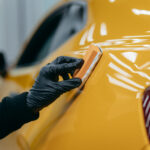
A professional-grade ceramic coating is not a glorified wax. It is a different category of protection entirely. Here is what it delivers that conventional products cannot:
- Water beads and sheets off rather than sitting and evaporating into spots. Contaminants ride off with it.Hydrophobic surface:
- Bird droppings, tree sap, and road tar sit on top of the coating rather than bonding to the paint. They are far easier to remove without damaging the surface beneath.Chemical resistance:
- The Toronto summer sun breaks down clear coat over time, causing the chalky, faded look that defines high-mileage vehicles. A quality coating absorbs and deflects UV energy before it reaches the paint.UV protection:
- A 9H-rated coating adds measurable hardness to the surface, reducing the fine swirl marks and light scratches that accumulate from routine washing.Scratch resistance:
- A single professional application typically lasts three to five years, compared to wax that washes away within weeks.Long-term cost efficiency:
The Spring Booking Reality
Quality ceramic coating is not a walk-in service. The prep work alone, decontamination wash, paint correction if needed, surface inspection, takes time. Shops that do this properly fill up fast once spring arrives.
If you are planning to coat your vehicle before summer, late March to late April is the window. After that, you are working around other people’s schedules rather than your own.
Frequently Asked Questions
How long does ceramic coating last?
A professionally applied coating from a reputable shop typically lasts three to five years with basic maintenance, including regular washing and an annual inspection coat.
Does my car need paint correction before coating?
If your paint has visible swirl marks, light scratches, or oxidation, yes. Applying a coating over imperfections locks them in permanently. At Detailing World, we inspect and correct the surface before coating goes on.
Can I apply ceramic coating myself?
Consumer-grade DIY coatings exist, but they offer less durability and hardness than professional products. The surface preparation process, done incorrectly, can also leave contamination sealed beneath the coating.
Is spring the only good time to coat?
No, but it is the best time for Woodbridge drivers. The temperature range is ideal for curing, the timing positions your vehicle ahead of summer UV damage, and the post-winter decontamination makes surface prep more thorough.
The Detailing World Process
At Detailing World in Woodbridge, ceramic coating begins with a full decontamination wash to remove embedded road fallout, iron deposits, and winter contamination. Paint correction follows if needed. Only once the surface is truly clean and refined does the coating go on.
The result is a finish that performs better than factory standard and holds that standard through sun, rain, road salt, and whatever a Toronto winter decides to bring next.
Ready to Protect Your Vehicle?
Book your spring appointment with Detailing World in Woodbridge before the schedule fills up.